
As core equipment in global industrial production and logistics warehousing, the electrical system of single girder crane directly determines operational safety and efficiency. With the popularization of intelligent technologies and tightening environmental policies, the global crane industry is undergoing a transformation towards safety upgrades, energy-saving transitions, and intelligent iterations. Mastering scientific electrical maintenance and standardized operation has become crucial for enterprises to achieve compliant operation and cost reduction.
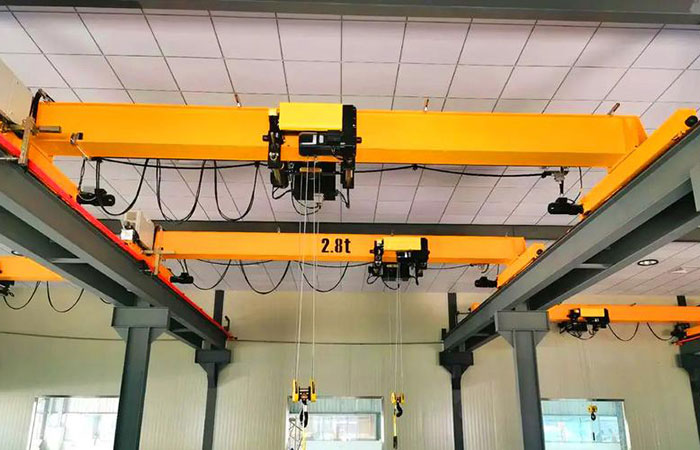
I. Electrical System Maintenance
Electrical system failure is the primary cause of crane downtime. Following daily inspections and regular in-depth maintenance can reduce equipment failure rates by 75%. The following standards comply with international standards such as IEC 60204 and OSHA 1910.179 and are applicable to various working conditions worldwide.
1.1. Daily Quick Maintenance
- Visual and Tactile Inspection: Operating handles are undamaged, buttons have sensitive rebound, electrical cabinets are odorless, and cabinet doors are properly sealed; cables are unworn, insulation layers are not cracked, and wiring terminals are not overheated or discolored.
- Safety Device Test: Lightly touch the limit switch (lifting/travel direction) to ensure immediate power disconnection. Press the emergency stop button to verify the rapid shutdown function of the entire mechanism.
- Voltage and Indicator Lights: Power supply voltage fluctuations should not exceed ±10% of the rated value, running indicator lights and fault warning lights should display normally.
1.2 Graded Regular Maintenance
| Maintenance Cycle | Core Operations | International Qualification Standards | Key Significance |
|---|---|---|---|
| Monthly | Clean dust in electrical cabinets; tighten wiring terminals; inspect contactor contacts | No ablation on contacts, no loose terminals | Prevent short circuits and poor contact |
| Every 3 Months | Measure insulation resistance with a megohmmeter; lubricate current collectors | Insulation resistance ≥ 1MΩ, contact resistance ≤ 0.1Ω | Avoid electric leakage and power loss |
| Annually | Replace aging cables/seals; calibrate inverters; test grounding systems | Grounding resistance < 4Ω, compliant with ISO 9927 | Eliminate electric shock hazards |
| Every 2 Years | Conduct comprehensive inspections of intelligent modules (e.g., IoT sensors) | Fault early warning accuracy ≥ 90% | Adapt to intelligent operation and maintenance trends |
1.3 Quick Troubleshooting Common Electrical Faults
- Motor Starting Failure: First check if the voltage meets the standard, then check for contactor contact erosion, eliminate overload, and strictly prohibit exceeding the rated load.
- Control Malfunction: First check for loose connections in the operating handle wiring, then replace aging relays. It is recommended to keep spare parts of universal models on hand.
- Rapid Temperature Rise: Reduce frequent starts and stops, adjust the brake clearance, and enable the inverter’s energy-saving mode, which can reduce energy consumption by 18-25%.
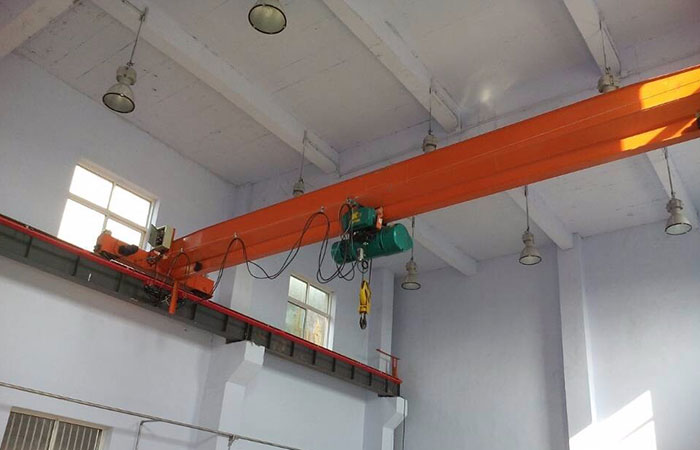
II. Safe Operating Procedures
Whether in European and American factories or Southeast Asian workshops, operating procedures must comply with local certifications (such as EU CE, US OSHA, China GB/T 6067), with core principles being globally consistent.
2.1 Essential Procedures Before Operation
- Operators must hold valid certificates; operating under the influence of alcohol or while fatigued is strictly prohibited. 1. Confirm the load weight is ≤ rated load, ensure the work area is free of obstructions, and wear safety helmets, non-slip shoes, and other protective equipment.
- Final verification: The electrical system should have no abnormal noises, and the limit switches, brakes, and overload limiters should function normally, with an installation rate of over 95%.
2.2 Absolute prohibitions during operation
- Smooth start and stop: Sudden acceleration or abrupt stops are prohibited. No one is allowed to stand under the load; maintain a safe distance of ≥1.5 meters.
- Three prohibitions: Do not lift at an angle, do not overload, and do not rely on limit switches for stopping.
- Collaborative operation: Follow only the instructions of one designated person; gestures/speech must be clear.
2.3 Standard post-operation procedure
- Raise the load to ≥2 meters above the ground, stop it in the designated area, turn off the main power and lock it to prevent misoperation.
- Record the operating status, report any electrical abnormalities immediately; do not operate with faulty components.
- Clean the operating handles and the area around the electrical cabinet, ensuring proper ventilation.
III. Industry Dynamics and Future Trends
3.1 Intelligentization Becomes Standard
In 2024, the global network connectivity rate for newly manufactured single girder cranes reached 89.3%. IoT technology enables remote monitoring of operational data (current, temperature, fault warnings), and AI algorithms can predict component aging trends, shifting maintenance from scheduled repairs to proactive prevention. For example, intelligent models from European brands offer 60% higher operating efficiency compared to traditional equipment.
3.2 Green Energy Conservation is the Core Direction
Driven by dual carbon targets, the application rate of rare-earth permanent magnet motors will increase from 20% to 40%, reducing energy consumption by 15-20%. Regenerative braking technology enables energy recovery, and lightweight materials (high-strength steel, carbon fiber) reduce equipment weight by 15-22%, shortening the investment payback period to 2.3 years. Global companies are accelerating the replacement of high-energy-consuming, outdated equipment.
3.3 Service Model Innovation
The Equipment as a Service (EaaS) model is rapidly penetrating the market. Enterprises can reduce initial investment by charging based on lifting tonnage. Service providers leverage industrial internet platforms to offer remote diagnostics and predictive maintenance. Aftermarket service revenue has risen to 21.4%.
3.4 Global Convergence of Safety Standards
The International Organization for Standardization (ISO) is promoting unified electrical safety standards. In the future, global standards such as insulation performance and emergency shutdown response speed will be standardized. For example, the requirement of grounding resistance ≤4Ω has been adopted by most countries, and enterprises need to adapt in advance to avoid export barriers.
Conclusion
Electrical maintenance and operation of single girder crane is not only the foundation for ensuring safety but also key to adapting to the global trend of intelligent and green manufacturing. Following internationally accepted standards and combining them with the latest technological upgrades can reduce accident risks and improve operational efficiency. In the future, with the popularization of modular design and intelligent operation and maintenance, the total life cycle cost of equipment will be further reduced, injecting stronger momentum into global industrial production.
Related Posts
What are the characteristics of European cranes?
Cranes are essential core handling equipment in modern factories, warehouses,…