
In ports, rail transfer stations, and large logistics parks, selecting the right container handling equipment is key to operational efficiency. The two main options on the market today are Rubber-Tired Gantry Cranes (RTGs) and Rail-Mounted Gantry Cranes (RMGs) . While they serve similar functions, they differ significantly in design, application, and cost structure.
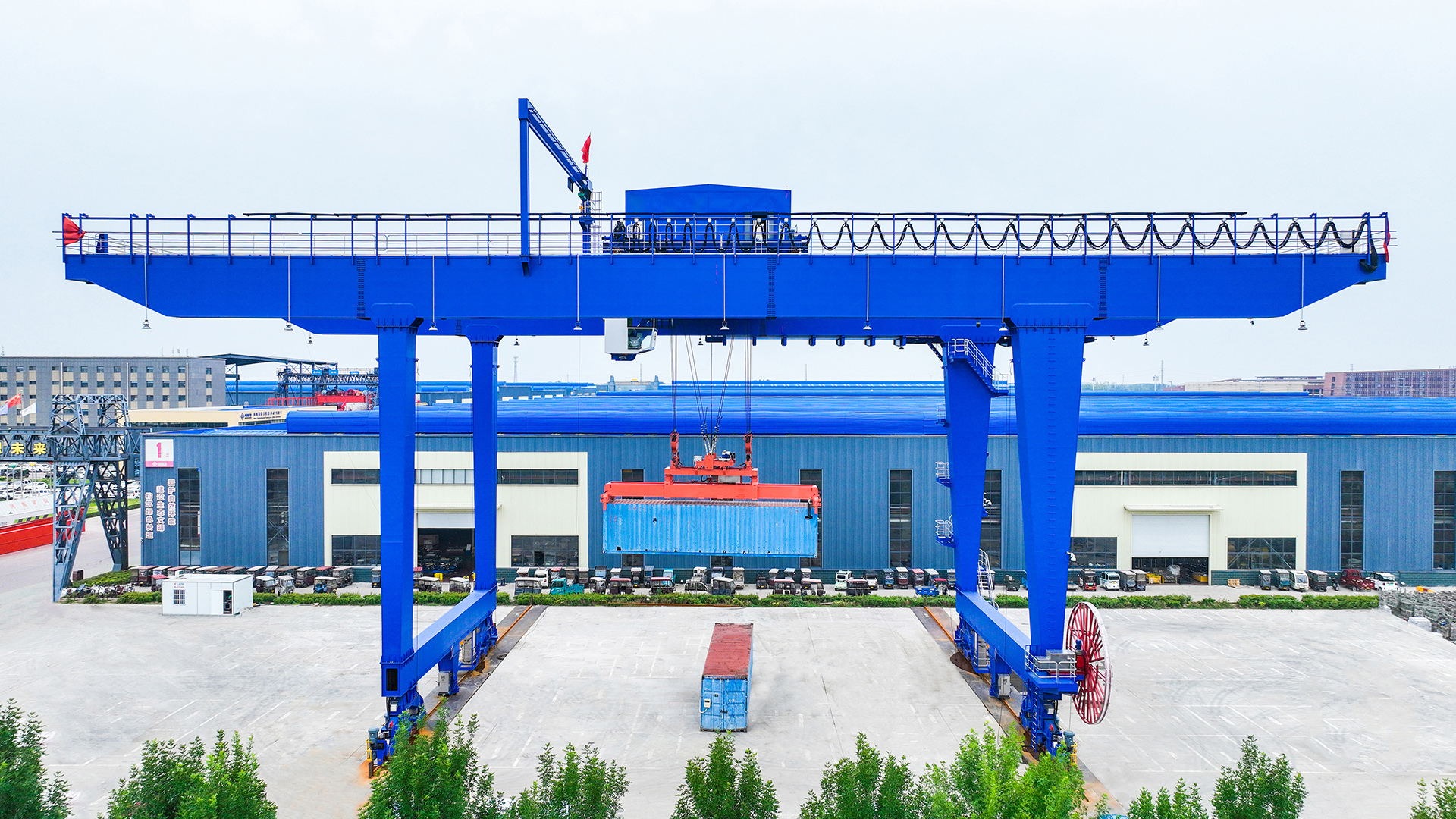
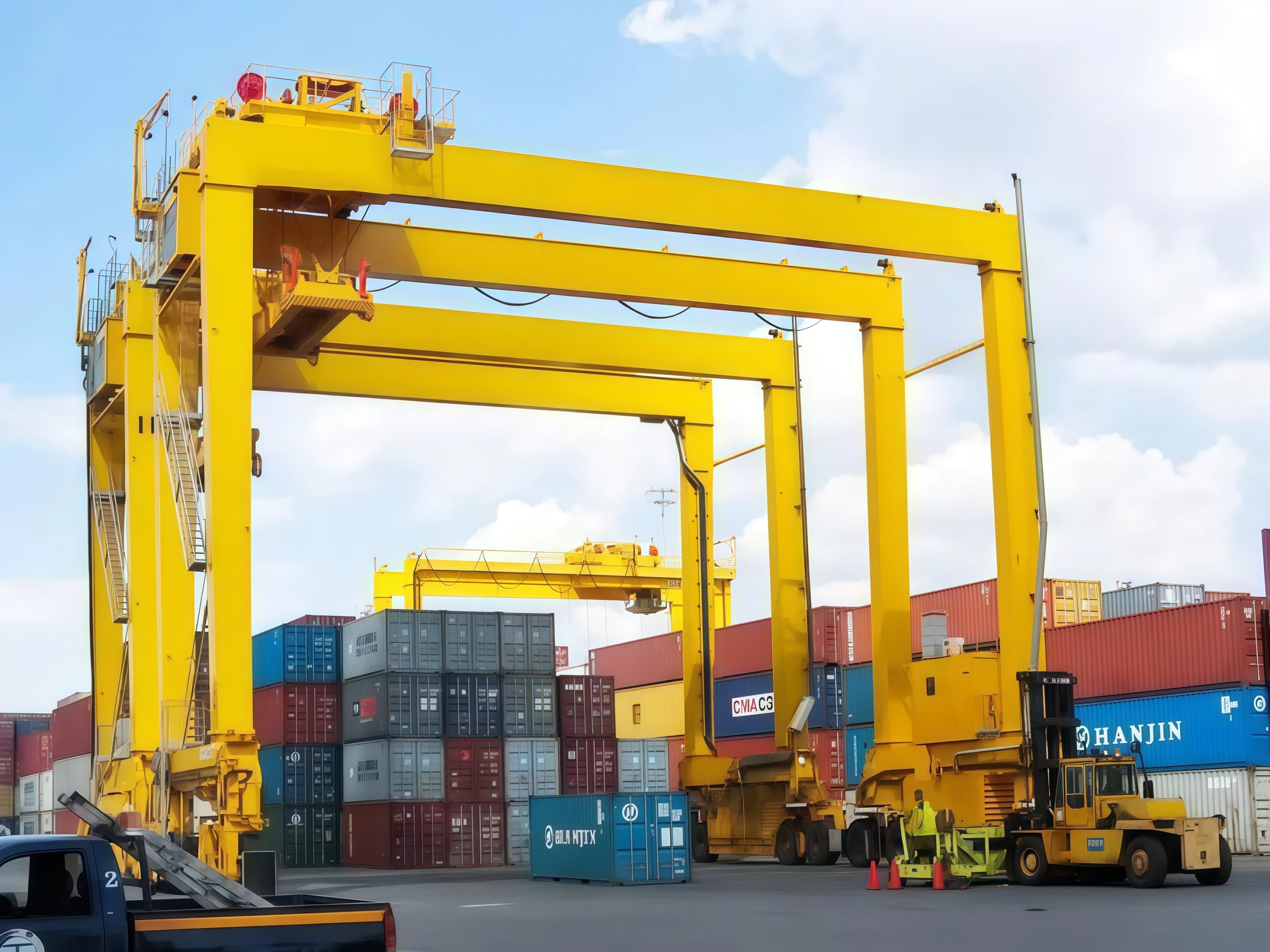
Rail-Mounted Gantry Cranes (RMG) Rubber-Tired Gantry Cranes (RTG)
RTG vs. RMG: Key Differences
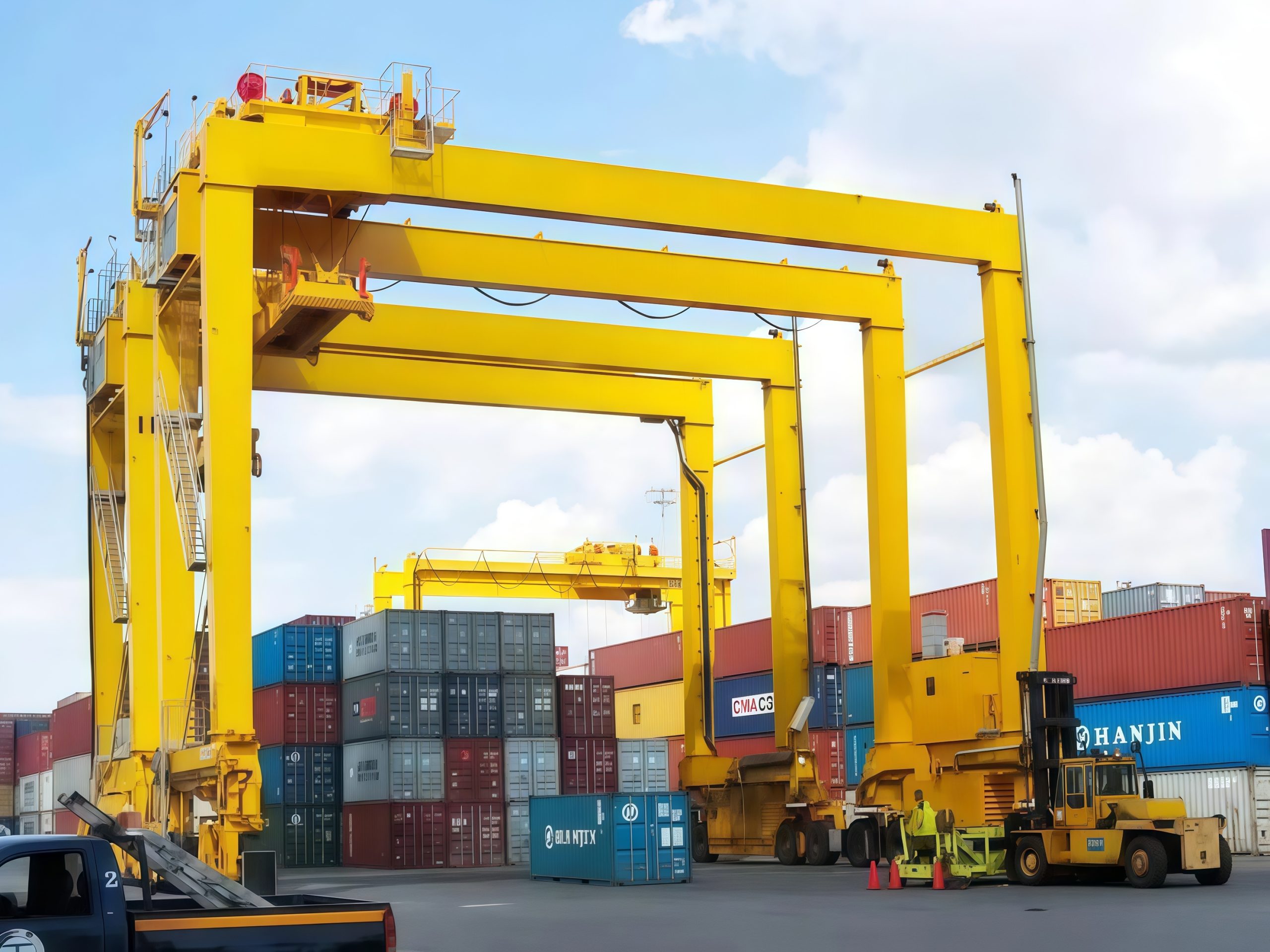
Rubber-Tired Gantry Cranes (RTGs) are the epitome of flexibility. As the name suggests, they travel on rubber tires and are not restricted to fixed tracks. This allows them to move freely across the yard and adapt to changing layouts, making them ideal for terminals that need dynamic operational flexibility. Typical specifications include lifting capacities of 30-60 tons , spanning 6-8 rows of containers, and stacking 4-6 high (approx. 18.5 meters). Power options are increasingly diverse, ranging from traditional diesel to diesel-electric hybrid and fully electric models that reduce emissions and operating costs.
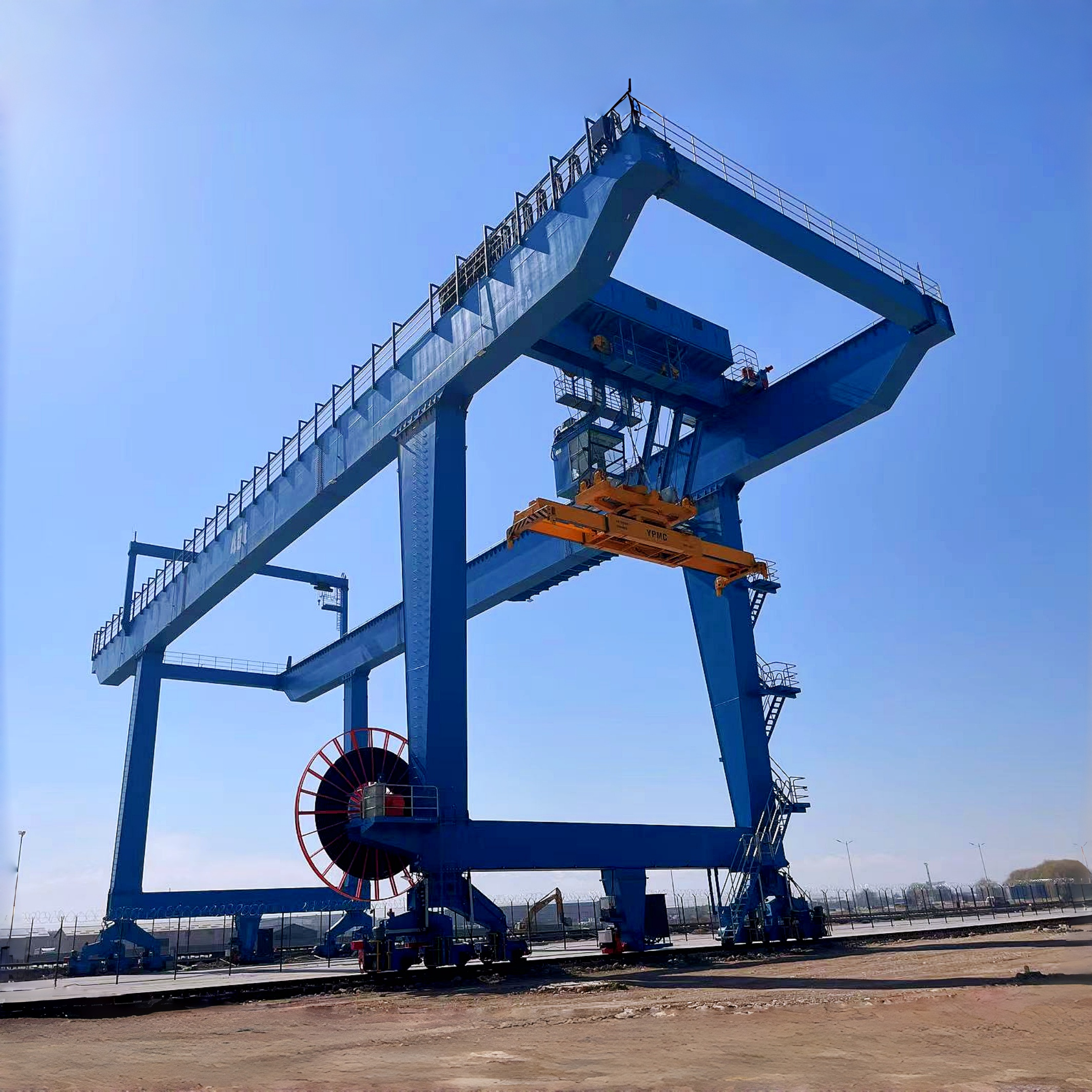
Rail-Mounted Gantry Cranes (RMGs) , in contrast, are built for precision and efficiency. They operate on fixed ground rails, ensuring stable travel paths and exceptional positioning accuracy. This makes them ideal for high-density storage, automated, and remote-controlled operations. Their robust structure allows for higher load capacities ( 40-100 tons ) and greater stacking heights ( 7+ tiers high , approx. 21 meters).
Choosing the Right Crane for Your Needs
Consider these factors when deciding between an RTG and an RMG:
Flexibility vs. Infrastructure: RTGs offer superior mobility for changing yard layouts, but RMGs require an upfront investment in rails and electrical infrastructure.
Operational Intensity & Efficiency: For high-volume, high-throughput hub terminals, RMGs offer clear advantages in precision, speed, and automation potential. RTGs are often the workhorse for medium-sized operations prioritizing flexibility.
Long-Term Operating Costs: This requires careful consideration. RTGs, especially diesel models, may have lower initial costs but higher fuel and maintenance expenses. RMGs run on grid power for lower energy costs, but rail maintenance is an ongoing factor. Hybrid RTGs are emerging as a balanced alternative.
RMG Technical Specifications
| Lifting capacity under spreader(t) | 35 | 41 | 70 |
| Wheelbase(m) | 10/16 | ||
| Span(m) | 30/35/40 | ||
| Lifting Height(m) | 12.5/15.3/18.3 | ||
| Number of Stacking Layers | 3 叠 1 / 4 叠 1 / 5 叠 1 | ||
| Container Size | 20′,40′,45′ | 20′,40′,45′ | 双人床 20′, 20′, 40′, 45′ |
| Lifting Speed (Full Load/Unloaded) (m/min) | 13/20 | 13/20 | 20/40 |
| Gantry Travel Speed (Full Load/Unloaded) (m/min) | 45 | 45 | 45 |
| Trolley Travel Speed (m/min) | 70 | 70 | 70 |
| Number of Wheels | 16/20 | 16/20 | 24 |
| Maximum Wheel Load (kN) | 250 | 280 | 300 |
| Power Supply | Three-phase AC | ||
RTG Technical Specifications
| Lifting capacity under spreader(t) | 35 | 41 | 70 |
| Wheelbase(m) | 7 | 7 | 7.5 |
| Span(m) | 23.47/26 | 23.47/26 | 23.47/26 |
| Lifting Height(m) | 15.5/18.5 | 15.5/18.5 | 15.5/18.5 |
| Number of Stacking Layers | 4/5 | 4/5 | 4/5 |
| Container Size | 20′,40′,45′ | 20′,40′,45′ | 20′,40′,45′ |
| Lifting Speed (Full Load/Unloaded) (m/min) | 20/40 | 25/50 | 25/50 |
| Gantry Travel Speed (Full Load/Unloaded) (m/min) | 30/130 | 30/130 | 30/130 |
| Trolley Travel Speed (m/min) | 70 | 70 | 70 |
| Number of Wheels | 8 | 8/16 | 16 |
| Maximum Wheel Load (kN) | 300 | 320/180 | 200 |
| Power Supply | Diesel generator set or three-phase AC | ||
Critical Parameters Often Overlooked
Beyond basic specs like capacity and span, two parameters deserve special attention:
Duty Class: This directly impacts durability. Choosing a crane with a lower duty class (e.g., A4 or A5) for high-frequency, intensive operations will lead to premature fatigue failure. The cost of early replacement far outweighs the initial price difference.
Automation & Communication Readiness: With the increasing trend toward port automation, the availability of automation interfaces and reliable data transmission has become a critical factor, especially for RMGs with their high automation potential.
Comparison of RMG and RTG
In container yard and port handling operations, rail-mounted gantry cranes (RMG) and tire-mounted gantry cranes (RTG) are two of the most common types. Each type of crane has its own advantages and is suitable for different operating scenarios and requirements.
| RMG (Rail-Mounted Container Gantry Crane) | RTG (Road-Mounted Container Gantry Crane) | |
| Operating Mechanism | Runs on a fixed track | Equipped with rubber tires, it can move freely in the yard |
| Applications | Primarily used in railway container yards and large ports. | Mainly suitable for container yards with flexible spatial layouts. |
| Span and Coverage | Can cover more container shipping routes or railway tracks. | Flexible, but span and coverage are limited. |
| Energy Source | Typically powered by electricity, more environmentally friendly. | Primarily diesel engines, but hybrid and electric types are also available. |
| Automation | Easier to automate and remotely control. | Automation is more difficult to achieve. |
| Cost | Higher initial investment, lower maintenance and operating costs. | Lower initial investment, higher fuel and maintenance costs. |
Conclusion
The choice between an RTG and an RMG isn’t about which is “better,” but rather about balancing flexibility, efficiency, capital investment, and long-term costs . Understanding the core differences and your specific operational needs is the first step toward making the right decision.
If you have any further questions about the specifications, or need assistance with specific applications, please feel free to ask – we have a professional technical team to help you!
Related Posts
What are the differences between bridge cranes type single beam and double beam?
At the top of industrial plants, bridge cranes are the…
Ethiopia’s Mojo Dry Port Expansion Completed, First Container Gantry Cranes Officially Commissioned
Recently, the completion ceremony for the Mojo Dry Port expansion…
Festoon vs Conductor Bar: Which Power System for Your Overhead Crane?
Every overhead crane needs a way to deliver electrical power…